
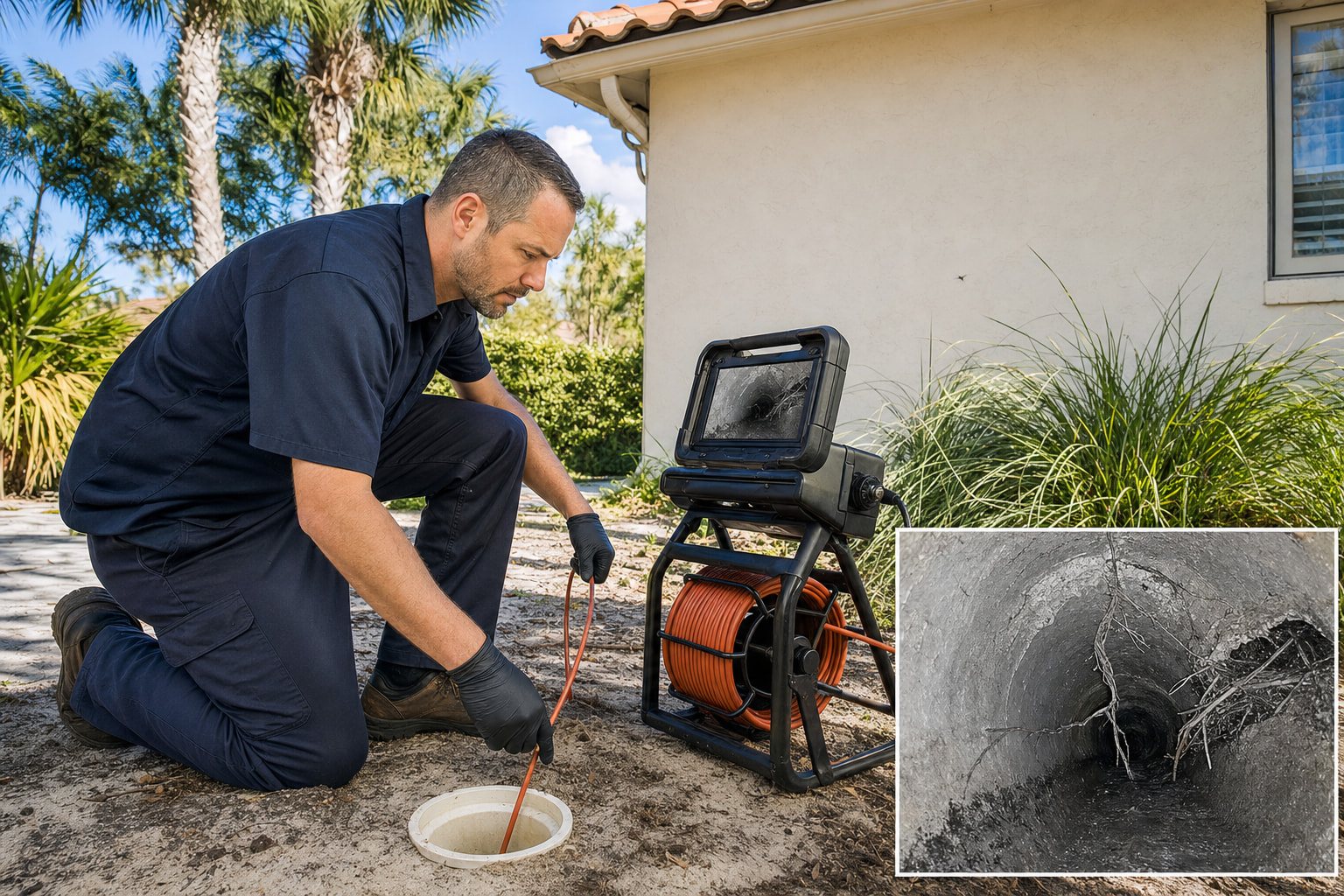
A Sewer Camera Inspection can reveal cracks, root intrusions, grease blockages, pipe collapses, offset joints, and hidden leaks inside your underground sewer lines, all without digging up your yard. The camera feeds live video from inside the pipe directly to a monitor, giving a plumber a clear, real-time picture of exactly what is happening below ground. Traditional drain-snaking or visual guesswork simply cannot match that level of detail.
For Port St. Lucie homeowners, this matters a lot. The area’s sandy, moisture-rich soil shifts constantly, and the region’s subtropical humidity accelerates pipe corrosion and root growth. A camera inspection is often the fastest way to know whether a slow drain is a minor clog or the start of a serious structural failure.
This post compares sewer camera inspection against traditional diagnostic methods so you can decide which approach fits your situation.
Sewer Camera Inspection vs. Traditional Diagnostic Methods: At a Glance
| Factor | Sewer Camera Inspection | Traditional Methods (Snaking / Hydro-jetting Blind) |
|---|---|---|
| What it finds | Cracks, root intrusions, collapses, offset joints, grease buildup, foreign objects | Clogs that respond to physical force; structural issues often missed |
| Accuracy | High, live video with pipe-location marking | Low to moderate, relies on technician feel and symptom guessing |
| Disruption to property | Minimal, no digging required for diagnosis | Minimal for snaking; excavation may follow if the problem is misdiagnosed |
| Best for | Recurring clogs, pre-purchase inspections, slow drains with unknown cause, suspected root intrusion | Simple, one-time clogs with an obvious cause |
| Typical cost range (general estimate) | $150 to $400 for residential lines | $100 to $250 for a standard snake; more if excavation follows |
| Provides documentation? | Yes, recorded video and pipe-location data | No |
Note: Cost ranges above are general industry estimates, not quotes from Smart Dry Port. Ask any plumber for a specific quote before scheduling.
What Can a Sewer Camera Inspection Reveal That Other Methods Miss?
A camera inspection gives a plumber a direct view inside the pipe, typically using a waterproof, high-resolution camera mounted on a flexible rod. It can identify at least six categories of problems that snaking or guesswork routinely overlooks.
Root Intrusion
Tree and shrub roots follow moisture. They find hairline cracks in clay or concrete sewer pipes and grow inside the line over months or years. In Port St. Lucie neighborhoods with mature oak or ficus trees, root intrusion is one of the most common causes of recurring slow drains. A camera shows exactly where roots have entered and how far they’ve spread, so a plumber can plan the right fix rather than just clearing the clog temporarily.
Pipe Cracks, Fractures, and Collapses
Older homes in Port St. Lucie, particularly those built before the 1990s, often have clay or cast-iron sewer lines. These materials crack over time, especially when the sandy local soil shifts after heavy rain. A camera can spot a hairline fracture before it becomes a full collapse, which can cost several thousand dollars to repair once the pipe fails completely.
Offset or Separated Joints
Ground movement can push pipe sections out of alignment. An offset joint creates a ledge inside the pipe where solids catch and build up. Traditional snaking clears the blockage but leaves the joint misaligned, so the problem returns within weeks. Camera footage shows the offset clearly, letting the repair crew target the right section.
Grease and Scale Buildup
Grease accumulates on pipe walls and hardens into a thick layer that narrows the pipe’s interior diameter over time. Camera inspection measures how severe the buildup is and whether hydro-jetting (a high-pressure water flush) is the right next step or whether the pipe wall itself is compromised.
Foreign Objects
Wipes labeled “flushable,” children’s toys, and construction debris are common finds. A camera locates the object precisely so it can be retrieved or cleared without unnecessary digging.
Hidden Leaks and Infiltration Points
Groundwater can enter a cracked sewer line, adding volume that overloads the system. The camera shows infiltration points that would never appear on a surface inspection. This kind of finding connects directly to Hidden Leak Detection work, because water moving in or out of a broken sewer line often causes soil erosion and moisture damage near the foundation.
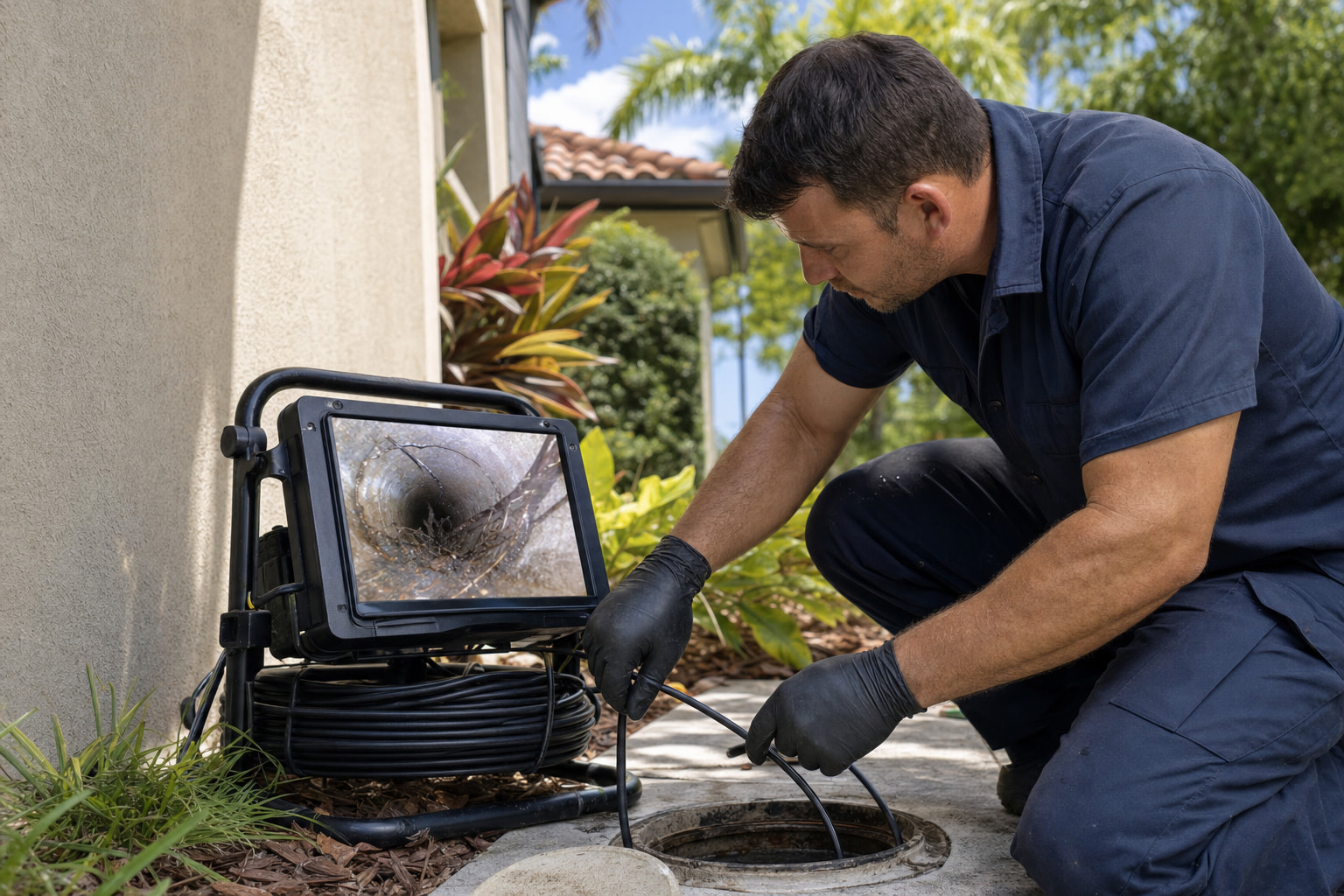
A sewer camera inspection turns an underground mystery into a documented, pinpointed problem, and that documentation is what separates a targeted repair from an expensive guess.
Traditional Diagnostic Methods: When They Still Make Sense
Traditional methods, mainly drain snaking and symptom-based diagnosis, are not useless. They are simply limited. A snake clears soft blockages (toilet paper buildup, minor grease) quickly and at a lower upfront cost. If a drain has been running fine for years and suddenly slows after a large family gathering, a snake is a reasonable first step.
Pros of Traditional Methods
- Lower upfront cost for a simple, one-time clog
- Faster turnaround for straightforward blockages
- Widely available from any plumber
Cons of Traditional Methods
- No visual confirmation of what caused the blockage
- Structural problems (cracks, root intrusion, offsets) go undetected
- Recurring clogs often mean repeated service calls that add up in cost
- Misdiagnosis can lead to unnecessary excavation
- No recorded documentation for insurance claims or real estate transactions
Best For
Traditional snaking works best for a first-time, isolated clog in a newer home with no history of drain problems. If the drain clears and stays clear, you’re done. If it comes back within a few months, that’s a strong signal to move to a camera inspection.
Sewer Camera Inspection: Pros, Cons, and Who It’s Best For
Camera inspection is the diagnostic tool of choice when the cause of a drain problem is unknown, recurring, or potentially structural. Here’s the full picture.
Pros of Sewer Camera Inspection
- Pinpoints the exact location and depth of a problem, so repairs target the right spot
- Provides recorded video that can support insurance claims or home sale disclosures
- Identifies multiple issues in a single pass (a crack AND root intrusion, for example)
- Prevents unnecessary excavation by confirming whether digging is actually needed
- Pairs naturally with Leak Locating services when a sewer leak is suspected near the foundation
Cons of Sewer Camera Inspection
- Higher upfront cost than a basic snake for a simple clog
- Camera cannot pass through a fully collapsed pipe section
- Does not clean the pipe, only diagnoses it (hydro-jetting or repair is a separate step)
Best For Port St. Lucie Homeowners
Camera inspection is especially valuable here for several reasons. Port St. Lucie’s older neighborhoods, including areas around Tradition, Torino, and the older sections near US-1, have a mix of clay, cast-iron, and early PVC sewer lines. The region’s heavy summer rain seasons (June through September regularly bring 6 or more inches per month) put constant pressure on underground pipes. A camera inspection before buying a home, after a major storm, or when a drain has clogged more than twice in a year is money well spent.
If a camera inspection does uncover a leak or moisture intrusion near your foundation, the next call is often about water restoration in Port St. Lucie, FL, because soil-saturated water can wick into slabs and wall cavities faster than most homeowners expect.
Which Should You Choose? A Practical Decision Guide
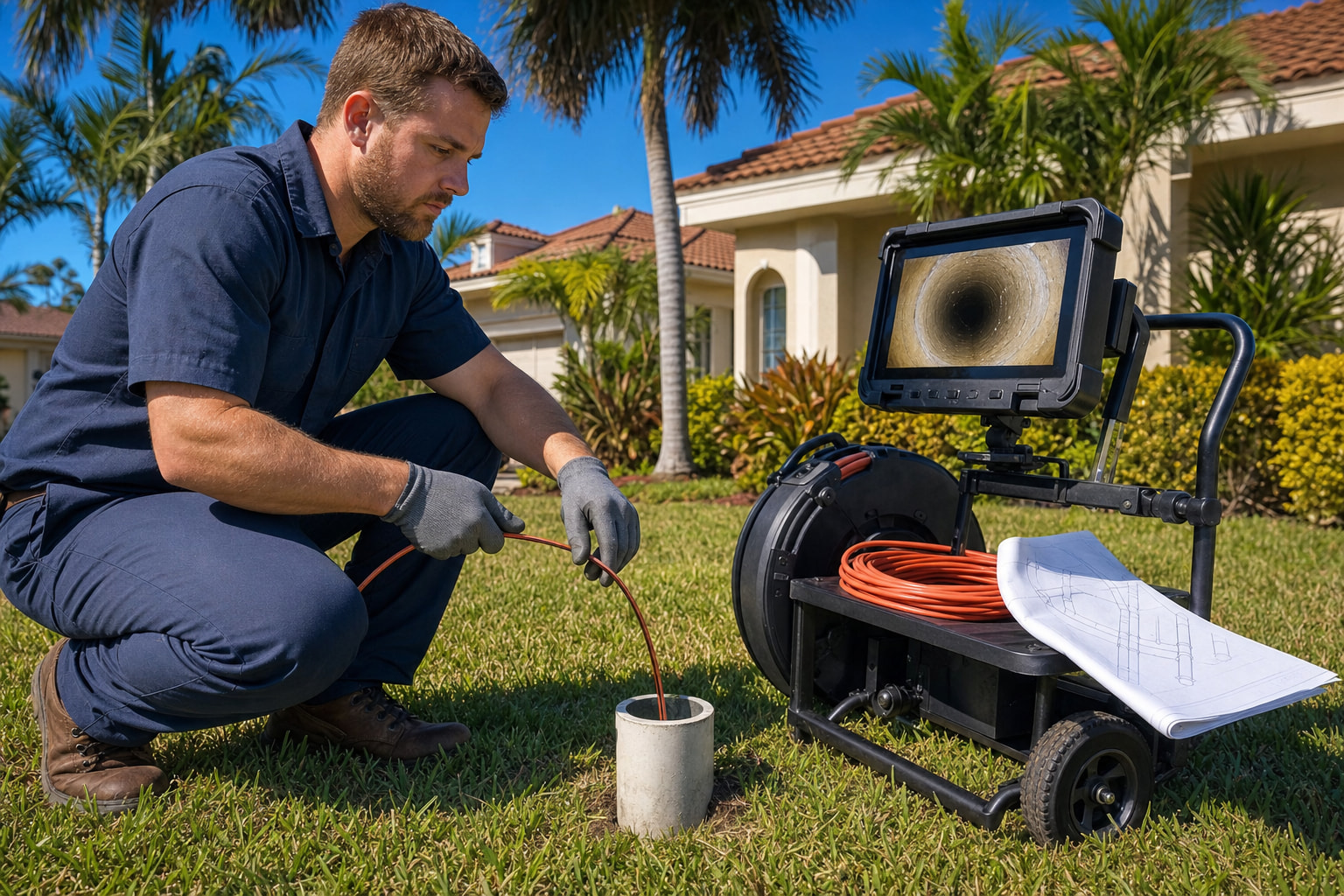
The right choice depends on three factors: how often the problem recurs, how old the pipes are, and what’s at stake financially.
- First-time slow drain, newer home (post-2000 construction): Start with a snake. If it clears and stays clear for six months or more, you’re fine.
- Recurring clogs (two or more times in 12 months): Skip the snake and go straight to a camera inspection. You’re paying for repeated service calls that aren’t solving the root cause.
- Pre-purchase home inspection: Always request a sewer camera inspection as part of due diligence, especially for homes built before 1990. Sewer line replacement can run $4,000 to $15,000 or more depending on depth and length, a cost that should factor into any offer.
- Slow drain plus wet yard, foundation cracks, or musty odors: Camera inspection first, then Slab Leak Detection if the camera shows a break near the foundation. These symptoms together suggest a structural failure, not just a clog.
- After a major storm or flood event: Port St. Lucie’s soil shifts significantly after heavy rain. A camera check confirms whether ground movement has offset any joints or cracked older pipe sections.
For any of these situations, a qualified plumber in Port St. Lucie, FL can walk you through what the camera footage shows and recommend the most direct repair path. Ask any plumber you hire whether they provide a recorded copy of the inspection video, that footage is yours and it matters for insurance and resale.
If the inspection leads to a repair, our Plumbing Repair page covers what that process typically involves. And if moisture has already reached your living space, the team at Smart Dry Port also handles Water Restoration in Port St. Lucie: What It Involves and When to Call so you understand the full scope of what comes next.
Ready to find out what’s actually happening in your underground pipes? Call Smart Dry Port at (772) 882-1939 to schedule a sewer camera inspection.
FAQs
What can a sewer camera inspection reveal that a plumber can’t see any other way?
A sewer camera inspection reveals the interior condition of underground pipes in real time, including cracks, root intrusion, offset joints, collapsed sections, and foreign objects. None of these are visible from the surface or detectable by feel during snaking. It’s the only method that gives a plumber documented, visual proof of what’s inside the line.
How long does a sewer camera inspection take?
Most residential sewer camera inspections take between 45 minutes and 2 hours, depending on the length of the line and how many access points are available. A standard single-family home in Port St. Lucie with a main sewer line running to the street is typically on the shorter end of that range.
Does a sewer camera inspection damage the pipes?
No. The camera is mounted on a flexible rod that moves through the pipe without contacting the walls with any force. It’s a purely diagnostic tool. The pipe is not pressurized or altered during the inspection, so there’s no risk of causing additional damage to an already fragile line.
Can a camera inspection find a slab leak?
A sewer camera can identify breaks or leaks in sewer lines that run under or near a slab. However, pressurized water supply lines under the slab require a different approach. If you suspect a supply-line slab leak, Slab Leak Detection using acoustic or pressure-testing equipment is the right tool for that specific problem.
How often should Port St. Lucie homeowners get a sewer camera inspection?
For homes with clay or cast-iron pipes (generally pre-1990 construction), every 3 to 5 years is a reasonable interval. For newer PVC lines with no history of problems, inspecting before a home purchase and after any major ground disturbance (storm, nearby construction, or foundation work) covers most risk scenarios.
Will my homeowner’s insurance cover sewer line repairs found during a camera inspection?
Standard homeowner’s insurance policies typically exclude gradual sewer line deterioration. Sudden, accidental damage may be covered depending on your policy. The camera inspection video is valuable documentation if you do file a claim, so always ask for a copy of the recorded footage. Review your specific policy or contact your insurer for details on what your coverage includes.
What happens after a sewer camera inspection finds a problem?
The plumber reviews the footage with you, marks the location of the problem on the surface (using a locator transmitter on the camera head), and recommends a repair method. Options range from hydro-jetting for grease or soft root intrusion, to pipe lining (trenchless repair), to targeted excavation for a collapsed section. The camera footage determines which approach is appropriate.