
What happens after a hidden water leak is found is a process most homeowners have never seen before. The short answer: finding the leak is only step one. A full resolution moves through leak confirmation, water shutoff, damage assessment, drying, pipe repair, and a final pressure test before your home is back to normal. Each stage matters, and skipping one can leave you with mold, structural damage, or a repeat leak months later.
Port St. Lucie’s high humidity, sandy soil, and aging pipe stock make this process especially important to get right. Here is exactly what to expect, in order, from the moment a hidden leak is confirmed to the day permanent repairs are complete.
1. Confirm the Leak Location With Precision
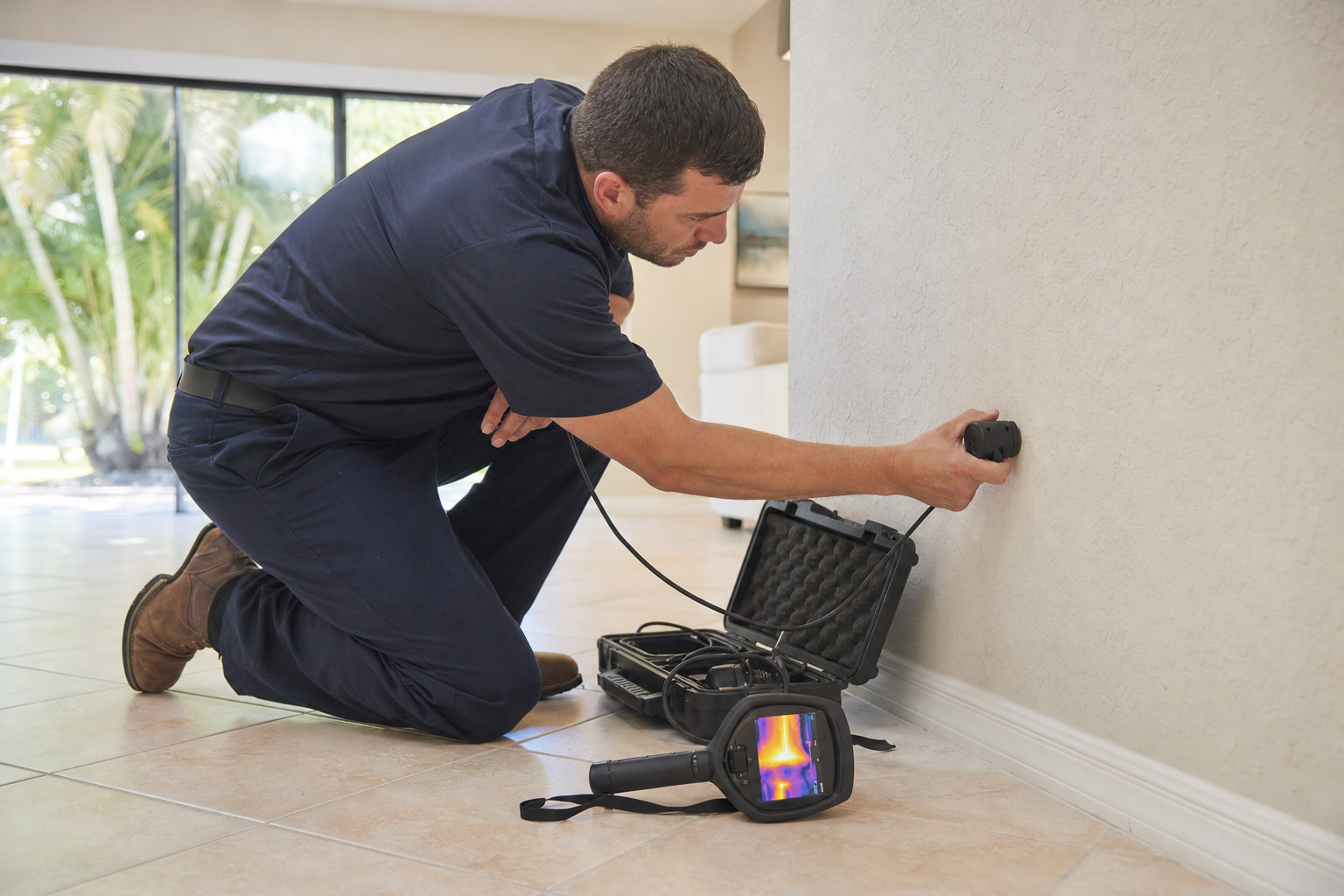
Before any repair work starts, the exact location of the leak must be pinpointed. A general area is not enough. Technicians use acoustic listening devices, thermal imaging cameras, or tracer gas to narrow the source down to within a few inches, so the smallest possible opening is made in walls, floors, or slabs.
This step is what separates a professional diagnosis from guesswork. Our hidden leak detection process uses non-invasive tools that read moisture levels and pipe pressure without tearing out drywall blindly. For leaks under concrete, slab leak detection equipment can locate the break point through several inches of foundation material.
Why precision matters: a missed inch can mean cutting into the wrong section of pipe, adding hours of labor and unnecessary damage to finishes.
2. Shut Off the Water Supply Immediately
Once the leak is confirmed, the water supply to the affected line (or the whole house, if needed) is shut off. This stops active water flow and prevents the damage from spreading while the repair plan is put together.
In Port St. Lucie, the main shutoff is typically at the meter box near the street or at a curb stop. Knowing where yours is before a leak happens saves critical minutes. If the leak is isolated to a single fixture or branch line, a zone valve shutoff may be enough to keep the rest of the house running.
- Locate your main shutoff valve before you ever need it.
- Label zone valves in your utility room or under sinks.
- Test each valve once a year so it doesn’t seize when you need it most.
3. Assess the Extent of Water Damage
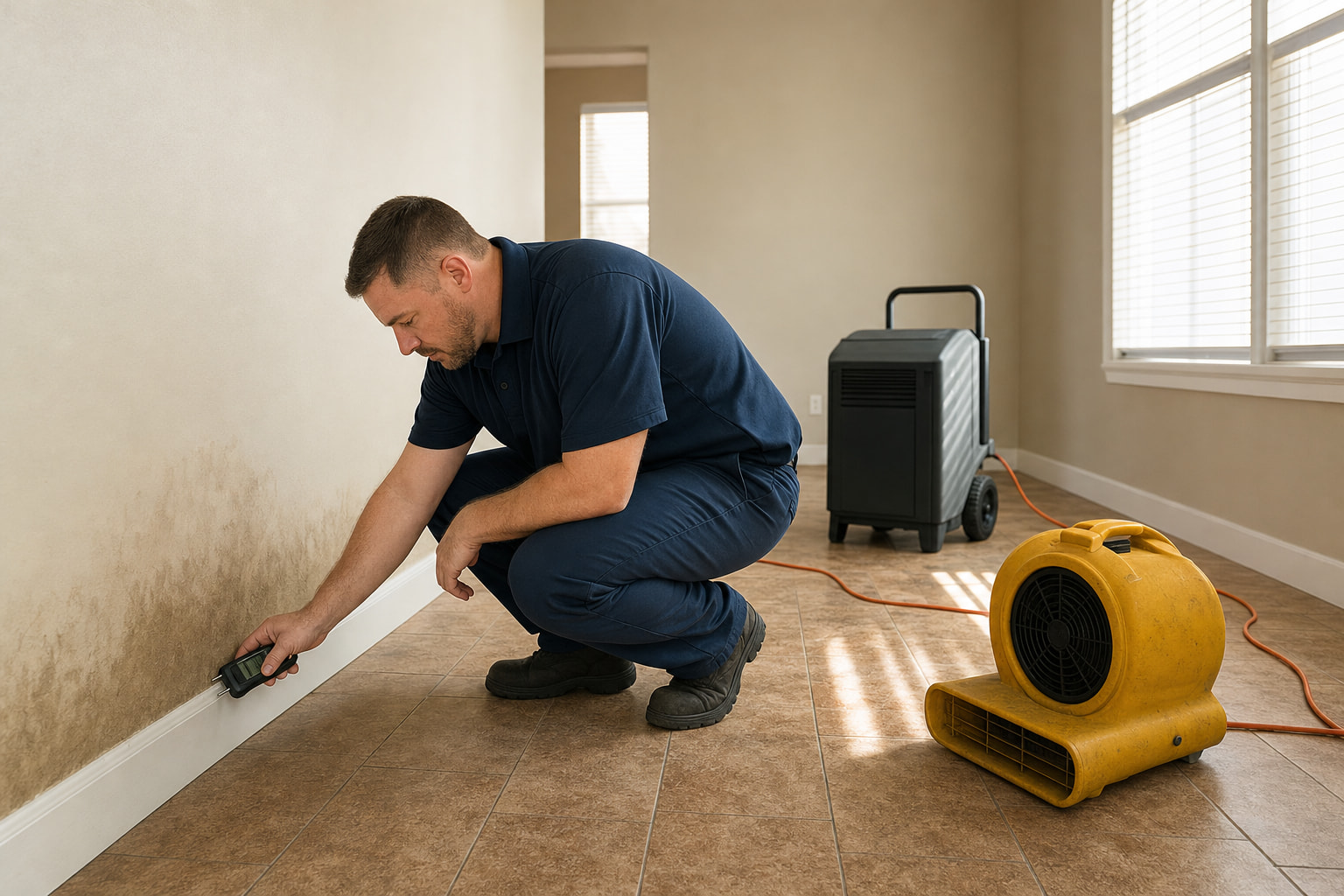
After the water is off, a moisture assessment tells you how far the water traveled. Hidden leaks are deceptive. A pinhole in a wall cavity can saturate insulation, framing, and subfloor over weeks before anyone notices a stain. Moisture meters and thermal cameras map the wet zone so nothing is missed.
This assessment directly shapes the drying and repair plan. A leak caught in the first 24 to 48 hours typically affects a contained area. One that ran for several weeks can saturate a much wider zone, sometimes crossing multiple rooms or floor levels. According to the IICRC S500 Standard for Professional Water Damage Restoration, water damage is classified into four categories based on the type of water and three classes based on the extent of evaporation load, and those classifications drive every drying decision that follows.
4. Dry Out the Affected Area Thoroughly
Drying is not optional, and it is not fast. Professional drying equipment, including industrial air movers and dehumidifiers, runs continuously until moisture readings return to acceptable levels. In Port St. Lucie’s climate, where outdoor humidity regularly sits above 70%, this step takes longer than it would in a drier region. Rushing it is the most common reason mold appears weeks after a repair.
Fixing the pipe without drying the structure is like patching a roof and leaving a bucket of water on the attic floor.
Drying timelines vary by material. Drywall and insulation dry faster than wood framing or concrete slabs. A typical residential drying job runs 3 to 5 days for contained damage, and longer for slab or subfloor saturation. Moisture readings are logged daily to confirm progress.
For Port St. Lucie homeowners dealing with significant saturation, water restoration in Port St. Lucie, FL covers the full drying and remediation process, not just surface cleanup.
5. Remove Damaged Materials That Cannot Be Saved
Some materials cannot be dried in place. Wet drywall, saturated insulation, and swollen wood trim often need to come out before drying can work on the structural framing behind them. This is called selective demolition, and it is a normal part of water damage remediation, not a sign that something went wrong.
Materials that typically require removal after a hidden leak:
- Drywall that has been wet for more than 24 to 48 hours (it loses structural integrity and can harbor mold)
- Fiberglass batt insulation (it holds water and does not dry effectively in place)
- Baseboards and trim that have swollen or separated from the wall
- Flooring over a slab leak, including tile adhesive and underlayment
- Cabinets with particleboard components that have absorbed water
Leaving wet materials in place is the primary cause of mold growth after a water leak. The EPA’s mold cleanup guidance recommends removing porous materials that cannot be thoroughly dried within 24 to 48 hours of water exposure.
6. Repair or Replace the Damaged Pipe
With the area dry and accessible, the actual pipe repair happens. The right repair method depends on the pipe material, the type of break, and where the leak is located.
Common repair approaches by leak type
- Pinhole leak in copper pipe: section cut out and replaced with a soldered or push-fit coupling
- Cracked PVC or CPVC: damaged section removed and replaced with new pipe and solvent-welded fittings
- Slab leak: options include direct access repair (cutting the slab), pipe rerouting through walls or attic, or epoxy pipe lining for certain configurations
- Corroded galvanized pipe: often a sign that a longer section or full repipe is the smarter long-term fix
A qualified plumber in Port St. Lucie, FL will walk you through the options for your specific pipe material and layout before any work begins. Ask any contractor you hire whether they are licensed and insured before work starts.
For general pipe repairs throughout the home, our plumbing repair service covers the full range of pipe materials common in Port St. Lucie homes, from older galvanized and copper to modern PEX.
7. Pressure Test and Final Verification
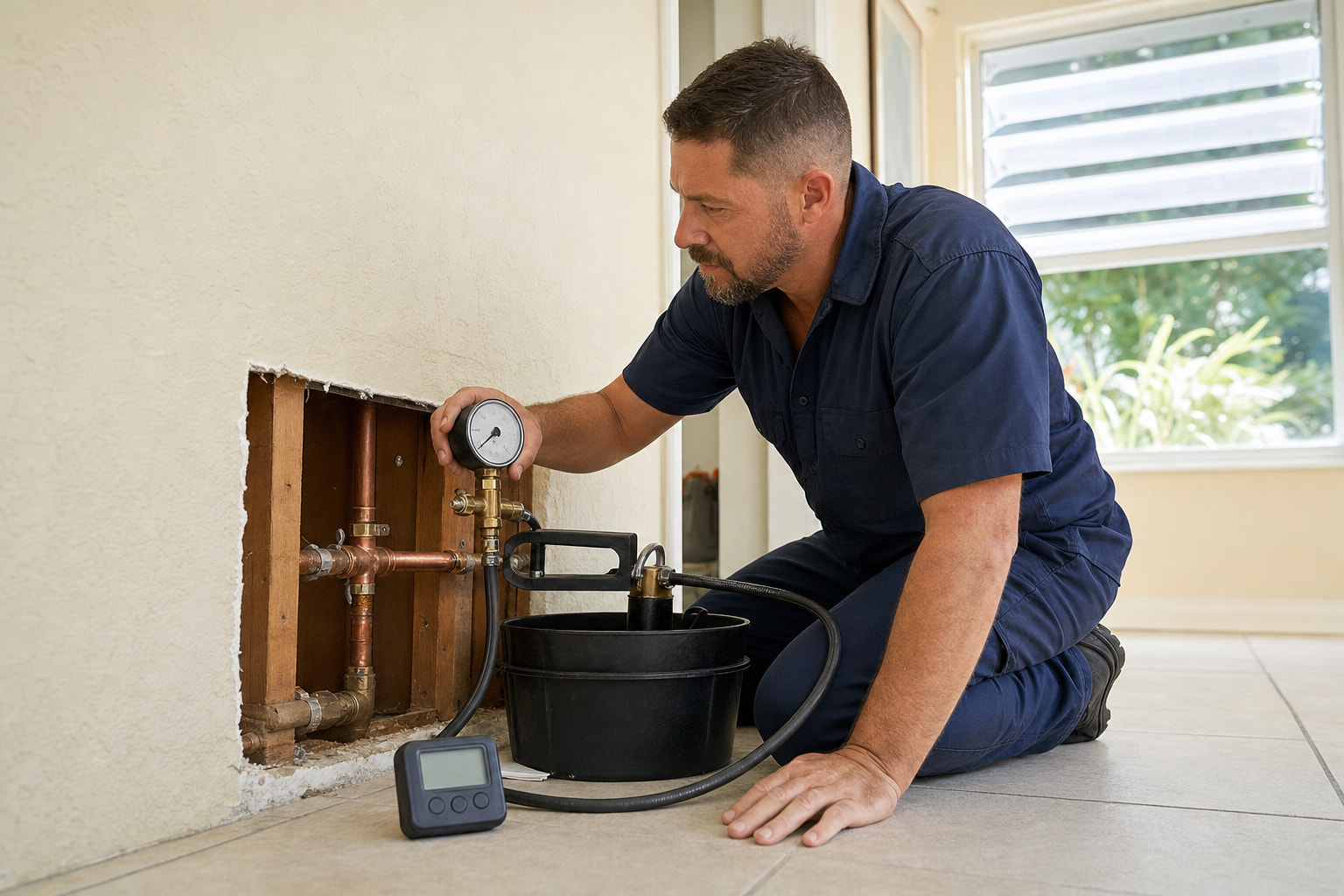
The last step before closing up walls or replacing flooring is a pressure test. The repaired line is pressurized and held at a set pressure for a defined period, typically 15 to 30 minutes, while technicians monitor for any drop. A stable reading confirms the repair is holding. A drop means there is still a leak somewhere in the system.
This step is non-negotiable. Skipping it and closing up the wall is how homeowners end up with a second leak call six months later. Our leak detection process includes post-repair verification so you know the fix held before any finishes go back up.
Once the pressure test passes, reconstruction begins: new drywall, insulation, paint, flooring, and trim. This phase is separate from the plumbing repair and is typically handled by a general contractor or restoration company, depending on the scope.
From the moment a hidden leak is confirmed in Port St. Lucie, a complete resolution moves through seven distinct stages: precise location, water shutoff, damage assessment, structural drying, material removal, pipe repair, and pressure verification. Each stage feeds the next. Homeowners who understand the full sequence are better equipped to ask the right questions, avoid shortcuts, and make sure the job is actually done before the walls go back up. If you’re somewhere in the middle of this process and need a hand, the team at Smart Dry Port handles leak detection, drying, and plumbing repair for Port St. Lucie homes.
FAQs
How long does the full process take from finding a hidden leak to completing repairs?
For a contained leak caught early, the full process from detection through pipe repair and drying typically takes 5 to 10 days. Larger leaks with significant structural saturation or slab involvement can run 2 to 4 weeks, especially when reconstruction of drywall and flooring is included. Port St. Lucie’s humidity extends drying times compared to drier climates.
Do I need to leave my home during water damage remediation?
Not always. For small, contained leaks, most homeowners can stay in the home while drying equipment runs. If the affected area covers a large portion of the living space, or if mold is present, temporary relocation may be recommended. Your remediation team will give you a clear picture after the initial moisture assessment.
Will my homeowner’s insurance cover the repair and restoration?
Most standard homeowner’s policies cover sudden and accidental water damage from a hidden pipe leak, but they typically exclude damage from long-term neglect or gradual leaks. Document everything with photos before any work starts, and contact your insurer as soon as the leak is confirmed. Your adjuster will want a written scope of work from the contractor.
What is the difference between leak detection and leak locating?
Leak detection is the process of confirming that a leak exists and identifying its general source. Leak locating goes further, pinpointing the exact position within a wall, slab, or underground line using acoustic or tracer gas equipment. Both steps are usually needed before any repair work begins.
Can a slab leak be repaired without breaking up the entire floor?
Often, yes. Depending on the pipe material and the location of the break, a slab leak can be repaired through a targeted access cut rather than a full floor demo. Pipe rerouting through walls or the attic is another option that avoids concrete work entirely. A slab leak detection assessment will show which approach fits your situation.
How do I know if mold has already started after a hidden leak?
Mold can begin growing on wet organic materials within 24 to 48 hours of water exposure, according to EPA guidelines. Early signs include a musty odor, visible dark spotting on drywall or grout, and allergy-like symptoms in occupants. A moisture meter reading above 16% in wood framing is a common threshold that signals elevated mold risk.
Should I use a sewer camera inspection after a hidden water leak?
A sewer camera inspection is most useful when the suspected leak involves a drain line, sewer lateral, or underground waste pipe rather than a pressurized supply line. If your leak symptoms include slow drains, sewage odors, or wet spots in the yard near the sewer line, a camera inspection is a smart diagnostic step before any excavation.
Ready to Move From Leak to Repair?
If you’ve found a hidden leak or suspect one in your Port St. Lucie home, don’t wait to get the full picture. Call Smart Dry Port at (772) 882-1939 to schedule a leak assessment and get a clear plan from diagnosis to permanent repair.